Today’s World Order in Disruption: The End of International Law as We Know It?
August 3 - 13, 2026
Lectures: 9:00 a.m. - 10.30 a.m. / 11:00 a.m. - 12.30 p.m. / 2:00 p.m. - 3.30 p.m.
Programme 2026
Today’s World Order in Disruption: The End of International Law as We Know It?
This year’s Munich Advanced Course in International Law explores whether we are witnessing a fundamental transformation of the international legal order or merely a new phase in its long history of contestation.
Against the backdrop of geopolitical fragmentation, hybrid warfare, economic coercion, institutional backlash, and rapid technological change, this year’s course examines the resilience and limits of international law. Is the UN-centered system still the cornerstone of global governance? Are sovereignty and statehood being redefined? How do sanctions, countermeasures, and economic instruments reshape legal doctrine? And can international institutions retain legitimacy in times of political confrontation?
Bringing together leading scholars and practitioners, MACIL 2026 offers critical perspectives on the foundations, institutions, and future trajectories of international law. Courses will include, among others:
- Global Governance under Pressure: Will the International Order Remain UN-Centered?
- The Dwindling Legitimacy of the ICC – Perspectives for the Future of International Criminal Law
- War, Governance, and Algorithms: How Artificial Intelligence Challenges International Law
- State Immunity and Countermeasures in an Age of Geopolitical Confrontation
- Economic Coercion and the Future of International Trade Law
Programme in General
The ever-growing importance of public international law can be illustrated in many ways: institutions like the World Bank, the IMF or the WTO have had a profound impact on the economic and financial systems of nations; international human rights law and international criminal law have rapidly evolved and expanded during the last decades; and the UN Security Council has developed into what some call a ‘world legislature’. Thus, public international law is a topic which merits a closer look, not only within the regular law curriculum but also outside the constraints of the university term.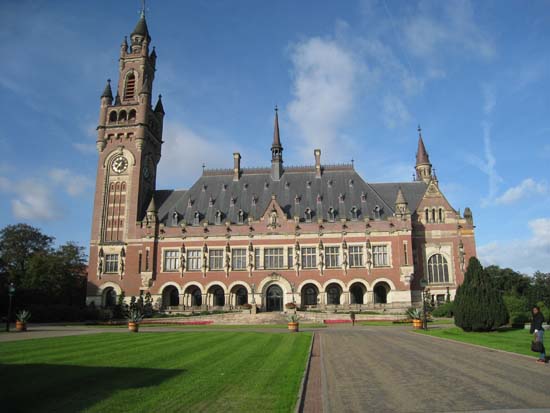
Ludwig Maximilian University (LMU) in Munich is a leading German university and home to a large community of scholars engaged in international law, international relations and related fields of study. With its rich heritage – famous international lawyers such as Erich Kaufmann and Bruno Simma held a chair at LMU – and the excellent research facilities provided by the exhaustive library, LMU is an ideal place to study international law. Last but not least, the city in the heart of Bavaria is a fantastic place to stay and an open place for international encounters.
The Munich Advanced Course in International Law offers an opportunity to dedicate two weeks to an intense and in-depth study of public international law. The summer school is run by LMU’s Institute of International Law. It takes place in early August and is entirely taught in English. For the MACIL course, distinguished lecturers (both academics and practitioners) from all over the world join the group and present their research to participants. The class is usually composed of 25 to 30 students, allowing for a close exchange of ideas between lecturers and students. In preceding years, participants have included advanced undergraduates, PhD students and young professionals from the fields of international law and international relations. Our students have come from almost any part of the world.
The one- to two-weeks summer course consists of various lectures which aim to address the general topic of the respective year from different perspectives. To prepare for the classes, we provide the students with reading materials and academic resources about a month in advance.
Additionally, the first day of the summer school includes a brief refresher course in international law. On the last day of the program, the participants have to demonstrate the acquired knowledge by arguing a fictional case before a court. Detailed information can be found in the program schedule which is usually uploaded in the first months of the respective year. Apart from the academic studies, the course also includes opportunities of networking and interaction with fellow participants, as well as social events.